December 9, 2021
Democracy vs. Plutocracy
American political thought is fundamentally atomistic, rooted in the belief that individuals are autonomous beings endowed with inalienable rights to pursue their own self-interest. This philosophical foundation normalizes intense competition, where a few emerge as winners while the majority are left behind. Those who succeed in this system often consolidate their power by forming political parties, which claim to represent the public but primarily compete for influence and control.
Elections serve as the formal mechanism through which these parties alternate power. Over time, practices such as political donations, lobbying, and media campaigning have been redefined as forms of free speech, allowing those with greater resources to dominate the political arena. As a result, elections become increasingly ideological and media-driven, shaped by those who have the means to sway public opinion. Ultimately, this dynamic fosters a political landscape in which policies tend to favor the wealthy, deepening social and economic inequality.
With elections increasingly vulnerable to financial influence, misinformation, and character attacks, American politics has become deeply contentious. Elected officials often prioritize performative rhetoric and media attention over effective governance, focusing more on pleasing donors and securing re-election than advancing the public good. The frequent shifts in party control lead to erratic policy reversals, undermining long-term planning and institutional stability. Each administration tends to overspend, accumulate debt, and resort to printing money to inflate short-term approval—leaving the economic consequences to future governments. Meanwhile, partisan gridlock paralyzes decision-making and intensifies social division.
Despite these dysfunctions, many Americans still regard the current system as the only legitimate form of democracy. In practice, however, the U.S. political system operates more as a partisan democracy than a people’s democracy. Increasingly, scholars argue that it has morphed into a plutocracy—rule by the wealthy and well-connected. Nobel laureate Joseph Stiglitz famously characterized the United States as a nation “of the 1%, by the 1%, and for the 1%.” Backed by powerful special interests, political elites often sideline the needs and voices of the broader population.
The consequences of this distorted system are stark. The U.S. has the highest levels of inequality among developed nations, and during the COVID-19 pandemic, it suffered a death toll over 170 times higher than China’s and an infection rate 1,600 times greater. Decades of financial mismanagement have pushed the national debt beyond $30 trillion, much of it channeled into private contractors, defense budgets, and corporate subsidies. Meanwhile, deep-rooted social problems—ranging from racial conflict and poverty to drug addiction and gun violence—continue to plague the nation.
With less than a quarter of the population of China or India, the U.S. nonetheless has the world’s largest prison population. Its healthcare system is the most expensive globally, yet millions remain uninsured or underinsured. Retirement ages have steadily climbed, placing increasing burdens on the elderly. According to the U.S. Life Insurance Guide, the average retirement age is 67.9 for men and 66.5 for women, compared to China’s 60 for men, 55 for women. Public education is in decline, infrastructure is aging, and the country has been at war for 229 of its 245-year history. These conflicts, often justified in the name of “American values,” perpetuate high military spending, weapons exports, and global dominance—primarily serving entrenched economic and political interests.
Although this system is labeled a democracy, the average American has increasingly little influence over the decisions that shape their daily lives.
In contrast, Chinese political thought is fundamentally holistic, emphasizing the interdependence of individuals within the broader social fabric. Human rights in China are framed in terms of collective well-being rather than individual autonomy. These rights encompass not only personal freedom but also values such as coexistence, equality, cooperation, and social harmony. Whereas American thought tends to view individuals as independent actors pursuing self-interest, Chinese thought sees people as intrinsically connected, with mutual obligations to family, community, and society. Rooted in Confucian tradition, this perspective prioritizes ethical behavior, consensus-building, and the pursuit of communal interests as essential to maintaining social stability and order. (See Understanding China: Geography, Confucianism, and Chinese-Style Modernization.)
China adopts a model of people’s democracy, prioritizing collective governance over partisan competition. While individual interests vary, leadership is expected to represent the broader will of the population. With a 5,000-year tradition of governance, China has historically recognized both the risks of factionalism and the importance of unified political leadership. The Communist Party of China (CCP), comprising nearly 100 million members, positions national interest above partisan agendas. Leadership selection occurs every five years through the CCP National Congress and the National People’s Congress, with candidates evaluated based on character, competence, and proven achievement, rather than rhetoric or ideology. Policy development involves extensive research, public consultation, and meticulous planning to balance short-term priorities with long-term national goals. Unlike the U.S., where governance often reflects special interest influence, China’s system seeks to foster a just and harmonious society rooted in shared prosperity. Institutional safeguards—including collective leadership, term limits, anti-corruption measures, public supervision, and internal discipline—aim to enhance accountability and prevent authoritarianism.
Differences in human rights perspectives shape how each country approaches key issues. In the U.S., COVID-19 precautions were largely seen as a matter of personal choice, with individual liberty prioritized over collective protection. In contrast, China placed public health first, with temporary restrictions widely accepted for the greater good. Similarly, Americans often view gun control as an infringement on personal freedom, whereas the Chinese regard strict firearm laws as essential for public safety. In the U.S., business regulation is frequently seen as a constraint on economic freedom, while in China, such oversight is viewed as necessary to reduce inequality. Intellectual property in the U.S. is tightly protected, often limit accessibility and innovation, while China promotes shared technological advancement to accelerate national development. And while the U.S. frequently invokes individual rights to justify foreign interventions, China considers such actions—including the instigation of color revolutions and conflicts under the banner of democracy—as violations of national sovereignty and human rights.
No political system is immune to failure. History teaches that if a nation fails to confront its ideological, institutional, and systemic flaws, decline is inevitable. The dominance of special interests—such as corporate lobbies and the military-industrial complex—erodes democratic legitimacy and public trust. Drawing from China’s long history, the collapse of a democracy under the weight of corruption and plutocracy may take less than three centuries (see Understanding China: The Vicious Circle of Regime Change). This is why Chinese political culture values collectivism and egalitarianism over individualism. As China rises, Confucian values are poised to play a larger role in shaping global political thought—an evolution worth noting and, perhaps, celebrating. (See Pluralism vs. Monism.)
November 30, 2021
The Cradle Effect
The warm embrace, captivating music, and rhythmic motion of the milonguero tango can lull a woman into a dreamlike state—much like a baby gently rocked to sleep in a cradle. This sensation can be so profound that, when the tanda ends, she may be reluctant to wake. I refer to this magical experience as “the cradle effect” (see Tango Is a Feeling).
At the beginning of a tanda, a woman may maintain some distance, especially if she’s unfamiliar with her partner. However, an experienced leader knows how to ease her into the dance, dissolve any hesitation, and invite her into a state of full immersion. Here are four keys to creating that experience:
1. Offer a Comfortable Embrace
The first key is to provide a cozy embrace—her cradle within the dance. Your hold should be gentle, tender, affectionate, and comfortable, fostering a sense of security without confinement. Allow her the space she needs, but strive to lead with your torso rather than your arms or hands. As she begins to follow your torso, her focus will shift from executing steps to fully absorbing the sensation. This transition elevates the movement from mechanical to emotional. (See The Heart of Tango: Mastering the Embrace.)2. Engage Her with the Music
The second key is to immerse her in the music—to mesmerize her with the melodies, so to speak. When you dance with the music rather than simply executing steps, you invite her to move from technical precision to a deeper connection with the melody and you. To achieve that, you must express the music in your unique way. If your movements are mechanical, stepping to every beat without nuance, she will likely mirror that rhythm without truly listening. However, when your movements reflect your personal interpretation, she can surrender to the moment and experience the music through you. Here, the quality of the music plays a critical role—but that is in the DJ’s hands. Dancers can only make the most of what is provided. (See My Two Cents on Music Selections.)3. Keep the Steps Simple
The third element is to keep the steps straightforward, allowing her to focus fully on the music and emotions rather than straining to execute complex movements. Avoid flashy or intricate choreography—the goal is not to impress but to enchant and mesmerize. Complicated figures can be distracting, making it difficult for her to surrender to the experience. In contrast, natural and simple movements foster an environment where she can let go effortlessly. (See Natural Movement Reigns Supreme Over Affected Mannerism.)4. Dance at a Slower Pace
Finally, resist the temptation to chase the beat. It’s hard to find relaxation when feeling rushed or excited. Instead, dance at a slower pace, incorporating smaller steps, gentle movements, slow motions, pauses, and suspensions. The goal is to create an atmosphere where your partner can enjoy the music and the rhythmic movement while remaining relaxed, effortless, and almost in a hypnotic state. When you notice her soften, release resistance, and fully yield to the dance, she has truly entered that state.On her part, all she needs to do is surrender and relax—letting go of ego, independence, and the impulse to perform. Instead, she should focus on the embrace, the connection, the music, the feeling, the synchronization, and the sensation of becoming one with her partner. Women, by nature, tend to be more emotionally attuned, intuitive, and responsive to the hypnotic pull of music, which may explain tango’s particular allure for them.
That said, the cradle effect isn’t exclusive to women. Men, too, long to be enveloped in a woman’s warm embrace. When both partners understand how to cultivate this experience together, the dance transforms into something mesmeric, intoxicating, and unforgettable.
November 18, 2021
Understanding China: Geography, Confucianism, and Chinese-Style Modernization
Five thousand years ago, tribal alliances and city-states began to form in the Yellow River and Yangtze River basins of East Asia. Over time, these burgeoning civilizations coalesced into a single entity—China—which gradually expanded until it encountered formidable natural barriers on all sides. To the northeast lay the icy expanse of Siberia; to the north, the vast and desolate deserts of Mongolia. The west was dominated by towering mountain ranges, with peaks exceeding 5,000 meters, including the Himalayas, home to Mount Everest at 8,848 meters. The south and east faced the immense Pacific Ocean. In ancient times, the lack of modern transportation rendered these geographical obstacles nearly insurmountable, effectively isolating China from the outside world. Enclosed by these natural defenses, the Yellow and Yangtze River basins benefited from a temperate climate and abundant rainfall brought by the Pacific monsoon, making them ideal for agriculture. This unique geographical setting played a decisive role in shaping the development and character of Chinese civilization.
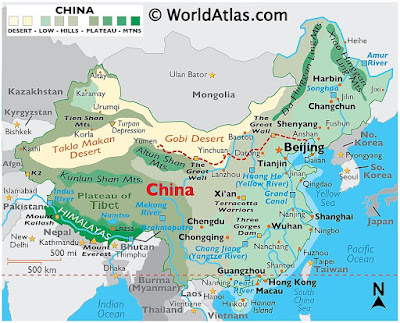
China's geographical barriers enabled it to sustain a homogeneous population and cultivate a unique and remarkable culture, largely shielding it from foreign influence and aggression. This seclusion allowed China to be the only ancient civilization to develop uninterrupted over more than five millennia. However, these natural defenses also constrained the Chinese worldview. Surrounded by these barriers, the Chinese perceived their land as the core of the world—referred to as 天下, meaning “all under heaven.” At its center lay the Yellow River and Yangtze River basins, which is why China is called 中國, or “central country.”
Blessed with fertile lands and abundant resources, China prospered significantly more than the surrounding frontier regions. Chinese peasants, living in kinship-based villages, developed strong ties to their arable lands and displayed little interest in the barren territories beyond, fostering a reserved and introspective disposition. Rather than pursue military expansion, the Chinese constructed the Great Wall to protect themselves from northern nomads. This 21,000-kilometer Wall, situated along the 400 mm isoprecipitation line and stretching from east to west, symbolized the division between sedentary agricultural societies and nomadic cultures.
Nomadic tribes that crossed the Wall and settled in China were eventually assimilated into the farming culture, becoming Chinese themselves. Thus, Chinese civilization, shaped by its geography, epitomized the triumph of a settled, productive way of life over a nomadic, predatory existence. The Chinese people's connection to the land, their introspective temperament, their reverence for nature, and their emphasis on harmony between man and the environment, along with their patience and long-term perspective, all stem from their agricultural roots. The Chinese have long taken pride in their land, culture, and way of life, as China remained the world’s most advanced civilization until the onset of the Industrial Revolution.
This geographical seclusion also fostered a monistic rather than pluralistic vision of the world. Unlike the Western notion of a world composed of multiple sovereign states, the ancient Chinese viewed the world as an integrated whole, with China as its sole civilized center. This worldview made the concept of 大一統 (Great Unity) a core element of Chinese cultural identity. Surrounding ethnic tribes were regarded as vassals within the Chinese tributary system, many of which were gradually sinicized and incorporated into China.
Scholars have noted that China's agrarian lifestyle necessitated a coordinated approach to managing water resources, contributing to the rise of a centralized state that emphasizes national unity and cooperation (see Understanding China: Yellow River and the Character of the Chinese Nation). Throughout its history, China has experienced the rise and fall of numerous dynasties, some of which were of foreign origin, yet each cycle ultimately ended in reunification rather than permanent fragmentation (see Understanding China: The Vicious Circle of Regime Change).
The first unification occurred in 221 BC, when the state of 秦 (pronounced “chin,” from which “China” is derived) defeated all rival states and established a unified dynasty. The 秦 standardized laws, scripts, currency, weights, measures, and even vehicle tracks, abolishing feudal fiefdoms in favor of a system of prefectures and counties. This advanced system laid the foundation for China’s enduring stability and prosperity and was adopted by all subsequent dynasties. The development of the Chinese political system and culture has exhibited a remarkable capacity for assimilation and integration, inspiring neighboring states to emulate it. Throughout history, various ethnic groups that partially or entirely conquered China were eventually absorbed into Chinese culture. This process of sinicization, rather than military expansion, accounts for the vast extent of China’s territory.
Aligned with this monistic worldview, Confucianism promotes a vision of society as an integrated whole. The 大同 (Great Harmony) society, an ideal described in Confucian classics, envisions a harmonious world where the wise govern, the honest live peacefully, the vulnerable are protected, and crime is nonexistent. In contrast to the Western emphasis on individualism, which often prioritizes personal interests and can pit the strong against the weak, causing egocentrism and conflict, Confucianism envisions society as an extended family, where members cooperate, seek common ground, prioritize communal interests over personal ones, and work collaboratively.
In Confucianism, individuals are not viewed as isolated and autonomous but as integral members of society, born into specific relationships with defined roles and responsibilities. They adhere to etiquettes designed to maintain social harmony—akin to tango dancers observing milonga codes in the milongas. These etiquettes or proprieties were practiced even before Confucius's time by the people of the Western Zhou Dynasty (11th–8th century BC). Confucius (551 BC–479 BC) and his disciples were scholars and ardent advocates of these ancient rites. Ultimately, Confucianism is rooted in a tradition that remains central to Chinese culture.
This tradition emphasizes the importance of harmonious relationships among people and society as a whole. Confucianism holds that societal stability depends on a solid foundation: the people. A ruler, much like the head of a family, derives authority from the people and is responsible for their welfare. As Confucius stated, “The ruler is the boat; the people are the water. Water can carry the boat, or overturn it.” Mencius (372 BC–289 BC), another prominent Confucian sage, echoed this sentiment, asserting that the people are the most important, followed by the state, with the monarch being the least. Confucianism teaches that a ruler’s legitimacy stems from the support or mandate of the people, and an unrighteous ruler will lose that mandate. In essence, Confucianism represents a people-centered collectivist humanism, in stark contrast to the individualistic humanism of the West. This collectivist humanism has shaped Chinese governance ideals that continue to this day—from Confucius's "天下為为公" (the world belongs to all people), to Sun Yat-sen's "Three Principles of the People," to the founding of the People's Republic of China, to the CCP's mission of serving the people, and to Xi Jinping's call for a community with a shared future for mankind (see Democracy vs. Plutocracy).
Rooted in this people-centered collectivist humanism, Confucianism advocates for benevolent governance. Confucius believed that benevolence (仁) is the essence of human nature, distinguishing humans from other animals. When a student asked him about the meaning of benevolence, Confucius replied, "To love others." Unlike Machiavelli, who separated morality from politics, Confucius viewed morality as the cornerstone of governance. He insisted that the ruler should be a saint at heart, a moral leader, and a role model; only through self-cultivation can he manage his family, govern his country, and bring peace to the world.
While Confucius emphasized the importance of proprieties (禮), he asserted that these observances must be grounded in benevolence; otherwise, they become hollow gestures. His followers, however, divided into two camps. The school that prioritized benevolence later became recognized as the orthodoxy of Confucianism. The school that emphasized proprieties evolved into Legalism. The unification of China by the 秦 state in 221 BC was achieved through military power and severe penal laws under the influence of the Legalist school of thought. Due to its brutality, the 秦 Dynasty lasted only two rulers before being overthrown by widespread rebellions.
Learning from this lesson, in 134 BC, Emperor Wu of the Western Han Dynasty accepted the advice of Confucian scholar Dong Zhongshu (179 BC–104 BC) to replace other schools of thought with Confucianism and implement benevolent rule. Since then, Confucianism has become the official ideology of China. Unlike Christianity and Machiavellianism, which posit that human nature is inherently evil, Confucianism asserts that human nature is inherently good. Consequently, it opposes the Legalist reliance on strict laws and harsh punishments as primary tools of governance, advocating instead for rule through virtue and education. This philosophy has given rise to the Chinese tradition of prioritizing morality and learning.
In 587 AD, Emperor Wen of the Sui Dynasty established the imperial examination system, linking education with civil service. This meritocratic system played a pivotal role in shaping China’s effective political bureaucracy. It further solidified the status of Confucianism, promoted Confucian scholarship, and opened doors for talented individuals from all walks of life to enter politics, thereby giving rise to the scholar-official class. China’s contemporary civil servant selection system is a continuation of this legacy. Many researchers argue that, compared to Western electoral democracy, China’s meritocratic system is better equipped to produce leaders with moral integrity, practical knowledge, and strong abilities, as evidenced by China’s illustrious history and modern economic achievements. However, the imperial examination system historically failed to prevent the recurrence of dynastic cycles. Today, China seeks to address this through political reforms, such as collective decision-making, age and term limits for officials, initiatives for clean governance, self-correction mechanisms, disciplinary inspections, anti-corruption campaigns, public oversight, reporting and petitioning mechanisms, and impeachment procedures. These efforts aim to improve governance, ensure accountability, and prevent the emergence of autocracy (see Understanding China: The Vicious Circle of Regime Change).
Based on this people-centered collectivist humanism, Confucianism also calls for equitable wealth distribution and condemns prioritizing economic interests over morality, employing unethical means to accumulate wealth, competing for monetary gain, and exacerbating the gap between rich and poor. Confucians argued that rulers should disperse the nation’s wealth among the people rather than compete with them for profit. As Confucius stated, “Rulers should not worry about not having enough, but about inequality.” This ethos inspired Chinese rulers throughout history to adopt egalitarian policies and enact benevolent governance.
The emphasis on morality over economy, however, historically led to the devaluation of merchants within traditional Chinese society, where they ranked below scholars, farmers, and craftsmen. China’s early post-1949 policies reflected this Confucian tendency, prioritizing morality and scholarship over economic development. During the reform and opening-up period initiated by Deng Xiaoping, the government shifted its focus to encourage business and entrepreneurship. Subsequently, the Chinese government targeted poverty alleviation programs and anti-monopoly efforts, upholding Confucian egalitarianism while recognizing the importance of economic development as a means to achieve common prosperity. The Confucian emphasis on production over commerce has also contributed to China’s physiocratic tradition, favoring agriculture and manufacturing over speculative capitalism—which often leads to cyclical recession, economic hollowing, corruption, inequality, and systemic collapse (see Mammonism).
Another influential Confucian concept is the Doctrine of the Mean, advocating for moderation and harmony. Confucius believed that harmony is the fundamental law of nature, with moderation leading to harmony and excess leading to disharmony. He regarded gentleness, kindness, respect, frugality, humility, impartiality, and the avoidance of extremes as essential qualities of a 君子—a person of high moral character. Deviation from the Doctrine of the Mean, he warned, could lead to disastrous consequences (see Meeting in the Middle).
This Confucian proposition stands in contrast to Western liberalism and individualism. The Chinese, lacking the arrogant, extreme, and aggressive spirit found in certain Western ideologies, have Confucianism to thank for their disposition. The emphasis on moderation, balance, and harmony has discouraged the Chinese from engaging in Western-style partisan politics, which often fosters division, conflict, hostility, and polarization. While Western culture prioritizes individualism, partisanship, and competition, Chinese culture values collectivism, unity, and cooperation. Chinese perspectives tend to approach issues in a holistic, comprehensive, and balanced manner. Contemporary Chinese leadership acknowledges that both morality and personal freedom are vital, recognizing that an excessive focus on either can be detrimental. An overemphasis on morality can stifle initiative and creativity, while excessive individual liberty can deepen conflict and inequality. However, striking this balance remains a complex challenge. Historically, Confucian morality was transformed by Neo-Confucians into a rigid ideology that limited personal freedoms. In contrast, Western liberalism and individualism represent the opposite extreme. The Chinese today strive to find a workable balance that respects individual freedom while upholding social morality (see Pluralism vs. Monism).
The peaceful life of the Chinese came to an abrupt end in 1840, when Western powers forced open China's doors through the use of opium, warships, and guns, compelling the Qing Dynasty (1644-1911), the last imperial dynasty, to sign a series of unequal treaties conceding territories and indemnities. Faced with this humiliating defeat and the stark contrast between an agrarian China and the already industrialized West, Chinese people began seeking solutions to save their country. Over the eight decades following the Opium War, various attempts were made: the Self-Strengthening Movement (1861–1895), which aimed to develop China's industry and modernize its armies and navies; the Reform Movement of 1898, which sought to overhaul the imperial system through constitutional monarchy; and the Revolution of 1911, which ultimately overthrew the monarchy. Despite these efforts, none succeeded in saving China. The exploitation by Western powers, compounded by chaotic power struggles among domestic warlords after the monarchy's collapse, drained China's resources. Once the richest country in the world, China was reduced to one of the poorest.
Having exhausted all reform solutions, some Chinese intellectuals began to conclude that the root of China’s struggles lay in its own culture. In 1919, the radical May Fourth New Culture Movement emerged. In a desperate bid for solutions, some intellectuals blamed Confucianism, especially Neo-Confucianism, for China's failures, accusing it of stifling individual freedom and social progress. They advocated for dismantling Confucianism and replacing it with Western-style liberal democracy and capitalism. Others, however, were skeptical of this path and turned to another Western ideology—Marxism—believing it resonated more closely with the Confucian ideal of an egalitarian and harmonious society. This ideological divide culminated in a confrontation between the KMT and the CCP. Ultimately, the side enjoying popular support prevailed, while the KMT retreated to the island of Taiwan across the Taiwan Strait.
In the first three decades following the founding of the People's Republic of China in 1949, the Chinese, while facing a blockade by Western powers, laid much groundwork for future development, including land reform, women's liberation, universal free education and healthcare, and building basic industrial infrastructure. Many lessons were learned through trial and error. In 1978, under Deng Xiaoping's leadership, the CCP reassessed the lessons of the previous thirty years and resolved to implement reform and opening-up policies. This initiative aimed to harness people's potential by introducing market mechanisms into the Chinese economy while maintaining the structural advantages of its socialist framework.
The results of this strategy are evident. In just 40 years, China has transformed from a poor and weak country into the world's second-largest economy, achieving a 42-fold increase in GDP. It has become the largest manufacturing powerhouse globally, lifted 770 million people out of poverty, created a middle class of over 400 million, and increased per capita income by 23 times. Additionally, the average life expectancy in China now exceeds that of the United States. China has also emerged as the world's largest investment market, largest consumer market, and largest trading partner with more than 130 countries, playing an increasingly significant role in the global economy and international affairs. In stark contrast to some Western powers that engage in hegemonism, bullying, intervention, and subversion, China’s foreign policies adhere firmly to five guiding principles of international relations: mutual respect for sovereignty and territorial integrity, non-aggression, non-interference in internal affairs, equality and mutual benefit, and peaceful coexistence. These principles are bolstered by China's Belt and Road Initiative for global common prosperity and its push for a community with a shared future for mankind. Such foreign policies reflect clear Confucian influences and are gaining increasing support globally.
Once again, China has entered an era of prosperity, and it achieved this not through aggression, colonization, conquest, or plundering other nations, but by guiding its own people to work hard and fostering cooperation with other countries for mutually beneficial outcomes. This remarkable achievement has restored the Chinese people's confidence in their philosophy, culture, system, and chosen path. The core values of Chinese civilization, as embodied in Confucianism, have been integral to this success. Without these values, socialism with Chinese characteristics and Chinese-style modernization—a unique form of modernization emphasizing civilized values, equality, justice, common prosperity, a green economy, peaceful development, and international cooperation—would not have been achievable.
Confucianism embodies the accumulated wisdom of the Chinese people, highlighting the unity, balance, and harmony between humanity and nature, individuals and society, law and virtue, morality and economy, rulers and the people, as well as among individuals themselves. Through its holistic vision, idealism, magnanimity, and positive outlook, Confucianism has served both as a unifying force and a reservoir of strength for the Chinese people, inspiring them to continually improve themselves and their country, thereby granting China its competitive edge. Though Confucianism must adapt to changing times, as it has done throughout history, it remains deeply ingrained in the language, culture, mindset, behavior, and consciousness of the Chinese people. For more than two millennia, Confucianism has been repeatedly tested, enriched, and replenished by successive generations of Chinese. Undoubtedly, it will continue to influence their pursuit of a brighter future. (See Darwinism and Confucianism.)
October 28, 2021
Understanding China: The Vicious Circle of Regime Change
The relatively short history of the United States leaves many Americans unaware of regime cycles and blindly optimistic about the permanence of the current political and economic systems. In reality, every regime or system has a finite lifespan and is ultimately replaced by another. (See America Is in Big Trouble).
In contrast, China, with its thousands of years of history, possesses a deep understanding of the cyclical nature of governance. Since its unification under the Qin Dynasty (pronounced “chin”) in 221 BCE, China has witnessed the rise and fall of thirty-one warlord regimes or dynasties. Among these, the eight longest-lasting dynasties that governed all of China include the Western Han (231 years), Eastern Han (195 years), Eastern Jin (103 years), Tang (289 years), Northern Song (167 years), Southern Song (152 years), Ming (276 years), and Qing (267 years). The rest endured for less than a century.
At their outset, dynasties often established a balance among competing interest groups through the redistribution of land, power, and wealth. However, this equilibrium inevitably eroded over time. Land was gradually reabsorbed by wealthy landlords, wealth reconcentrated into the hands of a few, and these elites gained increasing political influence to protect their privileges. As the majority lost access to the means of production, economic stagnation followed. Concurrently, regimes fell victim to corruption, factionalism, and internal power struggles, leading to governance failures such as profligate spending, militarism, excessive taxation, rising debt, and uncontrolled currency issuance. These internal weaknesses were often exacerbated by external shocks such as natural disasters, plagues, foreign invasions, and domestic rebellions.
While the specific lifespan of a dynasty varied, its eventual decline was inevitable. History suggests that three hundred years appears to be the upper limit for the time it takes a regime to decay. In China, no dynasty—no matter how successful—survived beyond three hundred years (see Democracy vs. Plutocracy).
From their long history, the Chinese have gleaned lessons that countries with brief historical experiences often lack. For instance, nations with shorter historical horizons may engage in policies of plunder, exploitation, and bullying of the weak, mistaking short-term dominance for lasting success. In contrast, the Chinese understand that the ultimate victor must be guided by moral integrity, justice, fairness, benevolence, and popular support (see Understanding China: Geography, Confucianism, and Chinese-Style Modernization). Building on this understanding, the Chinese established their current government, the People’s Republic of China. This government is genuinely of the people, by the people, and for the people, aiming to promote the well-being and prosperity of all citizens rather than serving the interests of a small group of landlords, industrial tycoons, and bankers.
History has taught the Chinese the harm of war and the importance of peace. War brings sufferings, destroys homes, disrupts economic development, depletes national strength, and breeds hatred. No militaristic regime can last long. In order to gain the support of the people, the government must focus on economic development rather than waging wars. The Chinese have also learned that a strong modern industry is the cornerstone of an independent nation, and that China must possess a complete industrial system, a comprehensive supply chain, a first-class scientific research community, top-tier education, and a capable defense force in order to take its destiny into its own hands.
History has also taught the Chinese that the annexation of land by a small number of powerful landlords ultimately leads to economic collapse. When most people lose their means of production, economic development stagnates. To prevent the concentration of resources in the hands of a few, land in China has been nationalized and allocated to the people for use, with private ownership and land trading prohibited. The Chinese have also learned that the dominance of capital over politics is a key cause of structural decay; thus, the state must oversee capital on behalf of the people, ensuring that it does not influence political decisions to favor special interests.
Furthermore, history has demonstrated that equality and common prosperity are the foundation of social stability. Accordingly, the government implements policies, initiates projects, provides opportunities, and offers financial and technical support to help individuals succeed in various business ventures, while prohibiting monopolistic behavior that restricts opportunity for others. This approach encourages individual initiative while ensuring state oversight of capital to protect the interests of all citizens. Through these measures, China has eradicated poverty, become the world’s largest manufacturing powerhouse, and cultivated the largest middle-class population on the planet.
The Chinese have also come to understand the importance of preventing regime cycles through good governance, meritocracy, collective decision-making, and continuous reform. They have learned through hard lessons the dangers of concentrating absolute power in a single leader, whether hereditary or elected. In response, China has developed mechanisms for collective leadership, established term and age limits for officials, and created systems to ensure orderly and peaceful leadership transitions. Leaders are selected based on moral character, competence, experience, and proven track records—not rhetoric, populism, or ideological posturing. Continuous reforms are implemented to address systemic shortcomings, including clean governance initiatives, self-correction mechanisms, disciplinary inspections, anti-corruption measures, public oversight, reporting and petitioning systems, and impeachment procedures.
Political decisions are made through consensus, grounded in research, surveys, consultation, and discussion rather than partisan conflict. Thousands of years of political experience have made the Chinese acutely aware of the dangers of partisan politics. Political parties represent special interests, and partisan strife severely weakens a government’s ability to govern while creating deep divisions among the populace. The constant rotation of power between rival parties results in policy inconsistency and makes long-term planning impossible. Moreover, voters are not always well informed or rational and can be easily manipulated by populist appeals, or swayed by empty promises and misinformation. Elected politicians often lack the moral depth and practical experience required for effective governance and frequently prioritize donors and short-term re-election goals over the long-term interests of the people. Current administrations may take irresponsible actions—such as overspending, overborrowing, and excessive money printing—to benefit their own tenures, leaving disastrous consequences for future governments. Without continuous reform, these shortsighted practices, driven by self-interest, make it impossible for a regime to escape its historical cycle.
The lessons of history are clear: no regime is immune to cycles of rise and fall. The United States, despite its current global influence, is no exception. If it continues to ignore the historical patterns that have led to the collapse of past regimes—unchecked wealth concentration, political corruption, partisan division, and the dominance of special interests over the common good—its downfall will be inevitable. Without honest self-examination and decisive reforms to address systemic inequality, political dysfunction, and economic mismanagement, the United States risks repeating the very mistakes that have toppled great powers throughout history. Only by learning from these lessons can it hope to preserve stability and avoid becoming yet another casualty of the vicious cycle of regime change. (See Pluralism vs. Monism.)
September 20, 2021
Internal Memo to Our Members
This past June, we resumed our weekly milonga, reaffirming our determination to face the challenges of the pandemic with positivity, confidence in our ability to manage the situation, and trust in one another. While it seems COVID-19 will continue for a long time, we refuse to let it keep us from living and dancing. However, to ensure this, we must remain vigilant and take proactive steps to protect ourselves and each other.
The challenges we face extend beyond the virus itself. Many individuals in this country continue to act irresponsibly, prioritizing personal liberties over collective well-being. By traveling, attending gatherings, and disregarding basic precautions—such as wearing masks, practicing social distancing, following quarantine measures, and getting vaccinated—they contribute to the ongoing spread of the virus. Despite having the world's best medical resources, the United States has recorded over 50 million confirmed cases and more than 800,000 deaths already—an unparalleled toll. In contrast, China, with a population of 1.4 billion, has largely contained the virus, while the U.S., with just a quarter of that population, continues to report over 200,000 new cases daily. Clearly, ideology has played a significant role in worsening the crisis here.
Even under these circumstances, many public tango events have prematurely resumed or are planning to. Large gatherings of dancers pose a significant transmission risk. A single infected individual could spread the virus to everyone present, who may then carry it to hotels, restaurants, airplanes, and their homes. Instead, we believe the safest way to enjoy tango during the pandemic is through small, private milongas with trusted dancers who adhere to strict precautions. Keeping groups separate minimizes cross-infection and enhances safety.
With this in mind, we have implemented the following rules for our gatherings:
1. Private Events Only – Our gatherings are temporarily closed to the public. Please do not bring guests or introduce new participants.
2. Full Vaccination Required – All attendees must be fully vaccinated, including receiving a booster shot.
3. Masks & Hand Hygiene – Masks must be worn, and hands sanitized frequently throughout the event.
4. Exclusive Participation – Members should attend only our group’s events and refrain from participating in other tango gatherings to reduce the risk of cross-infection.
5. Daily Precautions – Preventive measures should be followed in everyday life, and high-risk activities should be avoided.
6. Self-Quarantine & Testing – If you exhibit symptoms or engage in higher-risk activities (such as attending social gatherings, traveling by plane, staying in hotels, or dining out), you must self-quarantine for seven days and obtain a negative Covid-19 test before returning.
7. Shared Responsibility – We expect all members to remain vigilant and responsible in upholding these safety measures.
We deeply appreciate your cooperation and commitment to keeping our community safe. By dancing responsibly and supporting one another, we can continue to enjoy tango while fostering trust within our group.
Stay safe, stay mindful, and keep dancing!