Showing posts with label Doctrine of Mean. Show all posts
Showing posts with label Doctrine of Mean. Show all posts
February 6, 2024
Understanding China: Philosophies That Separate Two Worlds
Chinese philosophy is rooted in a holistic worldview that perceives the universe as an integrated whole rather than a collection of isolated parts. It holds that contradiction is inherent in all things, as every unity is composed of two opposing aspects—yin and yang, mountain and river, male and female, individual and collective, freedom and restriction, beauty and ugliness, good and evil, fortune and misfortune. These forces do not merely oppose; they intertwine, coexist, and form a dynamic equilibrium. They are complementary, interdependent, mutually sustaining, and indispensable.
Harmony arises when these opposites are in balance; when that balance is disturbed, harmony dissolves. Thus, Chinese philosophy opposes the antagonism between opposites, emphasizing the unity within contradiction and advocating the doctrine of the mean—a path of moderation and integration—as a means to sustain harmonious coexistence between opposing forces to benefit the entire ecosystem. (See Lessons from Tango.)
In this framework, human life is not defined by individualism, but by a profound commitment to collective well-being—where interdependence and harmony guide the intricate web of relationships. It seeks common ground while respecting differences, recognizing that while individuals may hold diverse interests and roles, cooperation and shared flourishing outweigh personal ambition. At its heart, Chinese thought upholds unity, balance, and peaceful coexistence—embracing collectivism over individualism, collaboration over confrontation, and mutual benefit over the defeat of adversaries. The well-being of society is placed above individual gain, with social harmony upheld through the cultivation of public morality. Human rights are understood not merely as personal entitlements, but as responsibilities toward the collective—aimed at securing peaceful, safe, equitable, and harmonious conditions for all (see Understanding China: Geography, Confucianism, and Chinese-Style Modernization).
Economically, China advances the vision of “common prosperity” through a hybrid model that blends state-owned enterprises, private initiatives, and market dynamics. This system protects individual freedoms—such as the right to pursue wealth within legal bounds—and encourages personal initiative, but always within a structure that aligns individual success with collective welfare. At the same time, it curbs the unchecked influence of special interests to safeguard societal integrity and the broader public good. The state plays a pivotal role in regulating capital, ensuring that economic growth does not come at the expense of social equity or long-term stability.
Politically, China stresses the central role of the state in uniting the people, managing differences, protecting the vulnerable, investing in infrastructure, and providing public goods. It adheres to the principles of democratic centralism and national cohesion, rejecting factionalism, partisanship, and decentralization. Chinese democracy—often described as “people’s democracy” and “whole-process democracy”—is consultative and consensus-driven, contrasting sharply with the adversarial nature of many Western electoral systems; it involves citizens in policymaking, implementation, and oversight, ensuring that public decisions reflect broad consultation and careful deliberation. By minimizing partisan strife, Chinese governance aims to foster shared prosperity, social harmony, and egalitarian development.
On the global stage, China upholds five guiding principles: mutual respect for sovereignty and territorial integrity, non-aggression, non-interference, equality and mutual benefit, and peaceful coexistence. It advocates for international cooperation, peaceful development, and a shared future for humanity marked by global prosperity and mutual respect.
In contrast, Western philosophy reflects an atomistic worldview, portraying the universe as a constellation of self-contained entities and emphasizing the individual rather than the collective. Rooted in individualism, it regards human beings as autonomous actors driven by self-interest—a perspective shaped in part by Darwinian concepts such as the “struggle for existence” and “survival of the fittest.” This outlook fosters a "might makes right" and “law of the jungle” mentality, where conquest are deemed essential for survival and success (see Darwinism vs. Confucianism). Western culture tends to prioritize self-interest, personal achievement, and strategic advantage, often at the expense of collective well-being and ethical responsibility. Its individualistic rhetoric of human rights ostensibly professes universal freedom, yet in practice serves only the privileged few—empowering them to defeat the disadvantaged majority and dominate legislation, the economy, media, military, and foreign policy for their own gain.
Economically, Western nations champion unrestrained capitalism, driven by self-interest and competition. While this approach may spur short-term growth, it often results in rampant inequality, unchecked greed, and systemic injustice. Special interests precedence over national welfare, benefitting only a small elite at the expense of broader society. The result is that the rich get richer, the poor get poorer, and for most people, "the pursuit of happiness" has become an illusion. The prioritization of capital gain over production inevitably leads to outsourcing and deindustrialization, hollowing out the economy, and eventually triggering systemic crises (see America Is in Big Trouble).
Politically, the emphasis on micro-gains over macro-interests and zero-sum victory over mutual benefit has plunged Western politics into the quagmire of power struggles, exacerbating social fragmentation, polarization, and radicalism. Despite formal democratic structures, these systems can devolve into political theater, rife with ideological extremes, empty promises, and sensationalism. Politicians, frequently funded by special interests, tend to serve their donors more than the public, reducing the role of voters to a periodic ballot with little real influence. Political strife often leads to government dysfunction, while the rotation of power between opposing parties causes policy swings between extremes and makes long-term planning impossible. (See Democracy vs. Plutocracy.)
In international affairs, Western powers often adopt a hegemonic posture, employing tactics such as divide-and-conquer, military interventions, economic sanctions, and regime change to safeguard their own security—often at the expense of others. These actions have destabilized regions, perpetuated global conflict, and undermined prospects for lasting peace. Historically, the West’s success has hinged on the conquest, colonization, genocide, exploitation, and plunder of weaker nations.
For a long time, the Chinese struggled to comprehend Western behaviors, yet they have now come to understand its underlying logic. Unless Western plutocrats alter their philosophical outlook, global peace remains elusive. This sentiment was succinctly expressed by the Chinese delegation during the Sino-US talks in Alaska: "We overestimated your integrity and assumed you would adhere to basic diplomatic norms. We must clarify our stance: You lack the authority and strength to assert dominance over China." Despite the potential dangers inherent in their worldview, Western plutocrats are unlikely to relinquish it. They view China from their own lens, assuming that once China becomes stronger, it will treat other countries the same way the West once did. It may require the collapse of the existing paradigm before humanity can aspire to construct a new world.
Thankfully, it becomes increasingly clear which philosophy holds more promise for humanity. As the world undergoes profound transformation, a new possibility is beginning to emerge. The rise of China and the relative decline of the West have given the Global South renewed hope. Many now glimpse the possibility of a new world order—one grounded in civilized values, peaceful coexistence, mutual respect, equality, justice, and win-win cooperation. This stands in stark contrast to the existing system, dominated by barbarism, self-interest, inequality, exploitation, power politics, and aggression (see Pluralism vs. Monism).


January 26, 2024
Understanding China: Yellow River and the Character of the Chinese Nation
China is a vast country, comparable in size to Europe. Roughly two-thirds of its landmass is mountainous, with terrain that rises in the west and gradually descends toward the east. The western region is dominated by towering mountain ranges, many exceeding 5,000 meters in elevation. Chief among them are the Himalayas, whose highest peak soars to 8,848 meters above sea level. In contrast, the eastern region transitions into a broad plain, dipping to below 50 meters above sea level.
The Yellow River, China’s second longest, originates in the Bayan Har Mountains of Qinghai Province at an altitude of 5,369 meters. It flows from west to east, traversing the Qinghai-Tibet Plateau, the Loess Plateau, the Inner Mongolia Plateau, and the North China Plain, before emptying into the Bohai Sea. Its basin covers approximately 795,000 square kilometers and spans nine provinces: Qinghai, Sichuan, Gansu, Ningxia, Inner Mongolia, Shaanxi, Shanxi, Henan, and Shandong.

Millions of years ago, the area east of the Taihang Mountains in central North China (indicated on the map below) was part of the ocean. The North China Plain—occupying the upper two-thirds of the green area on the map—was formed through the accumulation of sediment from the Yellow River over millions of years. Flowing through the Loess Plateau, the river collects an immense amount of silt, making its water literally yellow. It transports 1.6 billion tons of sediment downstream every year, about a quarter of which settles along the river’s course, and the rest washes into the Bohai Sea. The buildup of silt in the river’s lower reaches gradually raises the riverbed. Every once in a while, the Yellow River changes its course due to the blockage of large amounts of sediment. Wherever the terrain is lower, that's where the diverted river flows, carrying sediment with it and filling in depressions. For millions of years, sediment from the Yellow River has filled the low areas back and forth, created the vast North China Plain, which is larger than Britain. Today, the Yellow River is still reclaiming land from the sea and steadily pushing the coastline eastward. Scientists estimated that the Bohai Sea may be filled in within a few hundred years, further expanding the North China Plain.

Archaeology has revealed that eight thousand years ago people were already living on this land created by the Yellow River. The North China Plain—the cradle of Chinese civilization—has long been the most densely populated, economically vibrant, and culturally prosperous region in China, thanks to its fertile soil, temperate climate, and abundant rainfall brought by the Pacific monsoon, which made this region ideal for agriculture.
While the Yellow River has nourished the people living on this land it created, it has also brought them devastation. As the riverbed rose, people were forced to continuously reinforce embankments to protect farmland and settlements on both sides. Over time, the riverbed gradually rose above the surrounding ground; in some areas, it now stands 5–10 meters above the terrain, turning the river into a "hanging river." Once an embankment breaks, it unleashes catastrophic flooding, sweeping away everything in its path. Historical records show that, in the past 2,500 years, the Yellow River has burst its banks 1,593 times and changed its course 26 times. Each time the river floods, tens of thousands, hundreds of thousands, or even millions of people are killed or displaced. The Yellow River flood of 1897, related to Western invasion and domestic unrest, claimed the lives of two to seven million people. In 1938, due to the Japanese invasion of China, the breach of the Yellow River at Huayuankou resulted in the deaths of approximately 400,000 to 900,000 people, and displaced tens of millions more.
Efforts to manage the river have never stopped since ancient times. Perhaps no people in the world have had such a complex and paradoxical relationship with their mother river as the Chinese. They are deeply grateful for the nourishment she provides, yet they also harbor sorrow and frustration over her destructive force. But it is precisely through this intimate, turbulent relationship that the Yellow River has forged the perseverance, tenacity, hard work, and resilience of the Chinese people.
Chinese parents often use strict discipline to train their children, preparing them to face the severe challenges of life. This is not unrelated to the fact that they themselves grew up under the temper of the Yellow River. Westerners who embrace individualism tend to prioritize children’s independence and self-expression. Chinese parenting emphasizes perseverance, endurance, responsibility, and team spirit. This approach is deeply connected to their harsh living environment. In front of the Yellow River, individuals are insignificant. Controlling the Yellow River relies on collective strength. Therefore, Chinese philosophy places great emphasis on collectivism and teamwork. Western philosophy conceptualizes individuals as independent actors, prioritizing personal interests over collective concerns. In contrast, Chinese philosophy perceives individuals as interconnected and interdependent members of society with shared interests, responsibilities, and a common destiny. This prioritization of collective concerns over individual interests is heavily influenced by their shared burden imposed by the Yellow River.
The rich, fertile, yet troubled land of the middle and lower reaches of the Yellow River allows the people living there to not only enjoy the blessings of the river but also face the challenges it brings. This paradox has nurtured the dialectical thinking of the Chinese people. Unlike Westerners who often perceive things in stark black-and-white terms, the Chinese recognize that opposing forces coexist in all things, much like the river itself. Good fortune and misfortune, they believe, are intertwined. This awareness enables them to approach life with balance and equanimity, foresee the opposite outcome, remain cautious in times of peace, and find opportunity in adversity. Chinese philosophy discourages simplistic and extreme ideologies like individualism, feminism, Darwinism, unipolarism, hegemonism, or zero-sum thinking. Instead, it embraces the idea that diverse elements complement and coexist peacefully, akin to the harmony between the sexes. The Confucian doctrine of the mean advocates for moderation, balance, and harmony amid opposites. This seemingly modest approach allows them to coexist harmoniously within an environment that is both contradictory and integrated. This orientation also underlies the traditional Chinese aversion to factionalism and partisan politics—a perspective shaped, in part, by the need to maintain unity and cooperation in the face of natural disasters. (See Understanding China: Philosophies That Separate Two Worlds.)
The Yellow River is also a reason why China, despite its many periods of division throughout its millennia-long history, has always returned to unity. This great river has instilled the spirit of unity into the soul of the Chinese people. Managing the Yellow River—an enormous task that spans vast territories and demands massive manpower, meticulous planning, and nationwide coordination—necessitates a unified, centralized government with strong planning and organizational capabilities. This need has deeply influenced China's political development. The emphasis on unity and stability in Chinese political culture is rooted in the recognition that only a unified country with a stable and capable government can manage a river of such scale. In fact, the origins of Chinese state power can be traced back to river management. Dayu, the founder of the Xia Dynasty (circa 2070 BC–1600 BC), the first dynasty recorded in Chinese history, was revered for organizing the people to regulate the Yellow River. With thousands of years of experience, the Chinese have become skilled at mass mobilization and organization, honing themselves into the most disciplined and well-managed people. This collective capability has enabled China to weather its greatest challenges. By contrast, the Western political model—based on individualism and partisanship, where competing interest groups take turns governing—may serve special interests well, but it does not align with China’s unique needs.
In conclusion, the character, philosophy, culture, and political system of the Chinese nation are deeply rooted in their relationship with the Yellow River. This influential river nurtures the people to embody qualities such as resilience, solidarity, generosity, magnanimity, and wisdom—reflecting the attributes of their mother river. A civilization that has endured and overcome such severe challenges for millennia is formidable—and must never be underestimated.
(See also: Understanding China: Geography, Confucianism, and the Chinese-Style Modernization.)
November 18, 2021
Understanding China: Geography, Confucianism, and Chinese-Style Modernization
Five thousand years ago, tribal alliances and city-states began to form in the Yellow River and Yangtze River basins of East Asia. Over time, these burgeoning civilizations coalesced into a single entity—China—which gradually expanded until it encountered formidable natural barriers on all sides. To the northeast lay the icy expanse of Siberia; to the north, the vast and desolate deserts of Mongolia. The west was dominated by towering mountain ranges, with peaks exceeding 5,000 meters, including the Himalayas, home to Mount Everest at 8,848 meters. The south and east faced the immense Pacific Ocean. In ancient times, the lack of modern transportation rendered these geographical obstacles nearly insurmountable, effectively isolating China from the outside world. Enclosed by these natural defenses, the Yellow and Yangtze River basins benefited from a temperate climate and abundant rainfall brought by the Pacific monsoon, making them ideal for agriculture. This unique geographical setting played a decisive role in shaping the development and character of Chinese civilization.
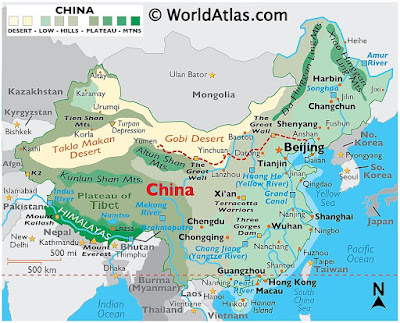
China's geographical barriers enabled it to sustain a homogeneous population and cultivate a unique and remarkable culture, largely shielding it from foreign influence and aggression. This seclusion allowed China to be the only ancient civilization to develop uninterrupted over more than five millennia. However, these natural defenses also constrained the Chinese worldview. Surrounded by these barriers, the Chinese perceived their land as the core of the world—referred to as 天下, meaning “all under heaven.” At its center lay the Yellow River and Yangtze River basins, which is why China is called 中國, or “central country.”
Blessed with fertile lands and abundant resources, China prospered significantly more than the surrounding frontier regions. Chinese peasants, living in kinship-based villages, developed strong ties to their arable lands and displayed little interest in the barren territories beyond, fostering a reserved and introspective disposition. Rather than pursue military expansion, the Chinese constructed the Great Wall to protect themselves from northern nomads. This 21,000-kilometer Wall, situated along the 400 mm isoprecipitation line and stretching from east to west, symbolized the division between sedentary agricultural societies and nomadic cultures.
Nomadic tribes that crossed the Wall and settled in China were eventually assimilated into the farming culture, becoming Chinese themselves. Thus, Chinese civilization, shaped by its geography, epitomized the triumph of a settled, productive way of life over a nomadic, predatory existence. The Chinese people's connection to the land, their introspective temperament, their reverence for nature, and their emphasis on harmony between man and the environment, along with their patience and long-term perspective, all stem from their agricultural roots. The Chinese have long taken pride in their land, culture, and way of life, as China remained the world’s most advanced civilization until the onset of the Industrial Revolution.
This geographical seclusion also fostered a monistic rather than pluralistic vision of the world. Unlike the Western notion of a world composed of multiple sovereign states, the ancient Chinese viewed the world as an integrated whole, with China as its sole civilized center. This worldview made the concept of 大一統 (Great Unity) a core element of Chinese cultural identity. Surrounding ethnic tribes were regarded as vassals within the Chinese tributary system, many of which were gradually sinicized and incorporated into China.
Scholars have noted that China's agrarian lifestyle necessitated a coordinated approach to managing water resources, contributing to the rise of a centralized state that emphasizes national unity and cooperation (see Understanding China: Yellow River and the Character of the Chinese Nation). Throughout its history, China has experienced the rise and fall of numerous dynasties, some of which were of foreign origin, yet each cycle ultimately ended in reunification rather than permanent fragmentation (see Understanding China: The Vicious Circle of Regime Change).
The first unification occurred in 221 BC, when the state of 秦 (pronounced “chin,” from which “China” is derived) defeated all rival states and established a unified dynasty. The 秦 standardized laws, scripts, currency, weights, measures, and even vehicle tracks, abolishing feudal fiefdoms in favor of a system of prefectures and counties. This advanced system laid the foundation for China’s enduring stability and prosperity and was adopted by all subsequent dynasties. The development of the Chinese political system and culture has exhibited a remarkable capacity for assimilation and integration, inspiring neighboring states to emulate it. Throughout history, various ethnic groups that partially or entirely conquered China were eventually absorbed into Chinese culture. This process of sinicization, rather than military expansion, accounts for the vast extent of China’s territory.
Aligned with this monistic worldview, Confucianism promotes a vision of society as an integrated whole. The 大同 (Great Harmony) society, an ideal described in Confucian classics, envisions a harmonious world where the wise govern, the honest live peacefully, the vulnerable are protected, and crime is nonexistent. In contrast to the Western emphasis on individualism, which often prioritizes personal interests and can pit the strong against the weak, causing egocentrism and conflict, Confucianism envisions society as an extended family, where members cooperate, seek common ground, prioritize communal interests over personal ones, and work collaboratively.
In Confucianism, individuals are not viewed as isolated and autonomous but as integral members of society, born into specific relationships with defined roles and responsibilities. They adhere to etiquettes designed to maintain social harmony—akin to tango dancers observing milonga codes in the milongas. These etiquettes or proprieties were practiced even before Confucius's time by the people of the Western Zhou Dynasty (11th–8th century BC). Confucius (551 BC–479 BC) and his disciples were scholars and ardent advocates of these ancient rites. Ultimately, Confucianism is rooted in a tradition that remains central to Chinese culture.
This tradition emphasizes the importance of harmonious relationships among people and society as a whole. Confucianism holds that societal stability depends on a solid foundation: the people. A ruler, much like the head of a family, derives authority from the people and is responsible for their welfare. As Confucius stated, “The ruler is the boat; the people are the water. Water can carry the boat, or overturn it.” Mencius (372 BC–289 BC), another prominent Confucian sage, echoed this sentiment, asserting that the people are the most important, followed by the state, with the monarch being the least. Confucianism teaches that a ruler’s legitimacy stems from the support or mandate of the people, and an unrighteous ruler will lose that mandate. In essence, Confucianism represents a people-centered collectivist humanism, in stark contrast to the individualistic humanism of the West. This collectivist humanism has shaped Chinese governance ideals that continue to this day—from Confucius's "天下為为公" (the world belongs to all people), to Sun Yat-sen's "Three Principles of the People," to the founding of the People's Republic of China, to the CCP's mission of serving the people, and to Xi Jinping's call for a community with a shared future for mankind (see Democracy vs. Plutocracy).
Rooted in this people-centered collectivist humanism, Confucianism advocates for benevolent governance. Confucius believed that benevolence (仁) is the essence of human nature, distinguishing humans from other animals. When a student asked him about the meaning of benevolence, Confucius replied, "To love others." Unlike Machiavelli, who separated morality from politics, Confucius viewed morality as the cornerstone of governance. He insisted that the ruler should be a saint at heart, a moral leader, and a role model; only through self-cultivation can he manage his family, govern his country, and bring peace to the world.
While Confucius emphasized the importance of proprieties (禮), he asserted that these observances must be grounded in benevolence; otherwise, they become hollow gestures. His followers, however, divided into two camps. The school that prioritized benevolence later became recognized as the orthodoxy of Confucianism. The school that emphasized proprieties evolved into Legalism. The unification of China by the 秦 state in 221 BC was achieved through military power and severe penal laws under the influence of the Legalist school of thought. Due to its brutality, the 秦 Dynasty lasted only two rulers before being overthrown by widespread rebellions.
Learning from this lesson, in 134 BC, Emperor Wu of the Western Han Dynasty accepted the advice of Confucian scholar Dong Zhongshu (179 BC–104 BC) to replace other schools of thought with Confucianism and implement benevolent rule. Since then, Confucianism has become the official ideology of China. Unlike Christianity and Machiavellianism, which posit that human nature is inherently evil, Confucianism asserts that human nature is inherently good. Consequently, it opposes the Legalist reliance on strict laws and harsh punishments as primary tools of governance, advocating instead for rule through virtue and education. This philosophy has given rise to the Chinese tradition of prioritizing morality and learning.
In 587 AD, Emperor Wen of the Sui Dynasty established the imperial examination system, linking education with civil service. This meritocratic system played a pivotal role in shaping China’s effective political bureaucracy. It further solidified the status of Confucianism, promoted Confucian scholarship, and opened doors for talented individuals from all walks of life to enter politics, thereby giving rise to the scholar-official class. China’s contemporary civil servant selection system is a continuation of this legacy. Many researchers argue that, compared to Western electoral democracy, China’s meritocratic system is better equipped to produce leaders with moral integrity, practical knowledge, and strong abilities, as evidenced by China’s illustrious history and modern economic achievements. However, the imperial examination system historically failed to prevent the recurrence of dynastic cycles. Today, China seeks to address this through political reforms, such as collective decision-making, age and term limits for officials, initiatives for clean governance, self-correction mechanisms, disciplinary inspections, anti-corruption campaigns, public oversight, reporting and petitioning mechanisms, and impeachment procedures. These efforts aim to improve governance, ensure accountability, and prevent the emergence of autocracy (see Understanding China: The Vicious Circle of Regime Change).
Based on this people-centered collectivist humanism, Confucianism also calls for equitable wealth distribution and condemns prioritizing economic interests over morality, employing unethical means to accumulate wealth, competing for monetary gain, and exacerbating the gap between rich and poor. Confucians argued that rulers should disperse the nation’s wealth among the people rather than compete with them for profit. As Confucius stated, “Rulers should not worry about not having enough, but about inequality.” This ethos inspired Chinese rulers throughout history to adopt egalitarian policies and enact benevolent governance.
The emphasis on morality over economy, however, historically led to the devaluation of merchants within traditional Chinese society, where they ranked below scholars, farmers, and craftsmen. China’s early post-1949 policies reflected this Confucian tendency, prioritizing morality and scholarship over economic development. During the reform and opening-up period initiated by Deng Xiaoping, the government shifted its focus to encourage business and entrepreneurship. Subsequently, the Chinese government targeted poverty alleviation programs and anti-monopoly efforts, upholding Confucian egalitarianism while recognizing the importance of economic development as a means to achieve common prosperity. The Confucian emphasis on production over commerce has also contributed to China’s physiocratic tradition, favoring agriculture and manufacturing over speculative capitalism—which often leads to cyclical recession, economic hollowing, corruption, inequality, and systemic collapse (see Mammonism).
Another influential Confucian concept is the Doctrine of the Mean, advocating for moderation and harmony. Confucius believed that harmony is the fundamental law of nature, with moderation leading to harmony and excess leading to disharmony. He regarded gentleness, kindness, respect, frugality, humility, impartiality, and the avoidance of extremes as essential qualities of a 君子—a person of high moral character. Deviation from the Doctrine of the Mean, he warned, could lead to disastrous consequences (see Meeting in the Middle).
This Confucian proposition stands in contrast to Western liberalism and individualism. The Chinese, lacking the arrogant, extreme, and aggressive spirit found in certain Western ideologies, have Confucianism to thank for their disposition. The emphasis on moderation, balance, and harmony has discouraged the Chinese from engaging in Western-style partisan politics, which often fosters division, conflict, hostility, and polarization. While Western culture prioritizes individualism, partisanship, and competition, Chinese culture values collectivism, unity, and cooperation. Chinese perspectives tend to approach issues in a holistic, comprehensive, and balanced manner. Contemporary Chinese leadership acknowledges that both morality and personal freedom are vital, recognizing that an excessive focus on either can be detrimental. An overemphasis on morality can stifle initiative and creativity, while excessive individual liberty can deepen conflict and inequality. However, striking this balance remains a complex challenge. Historically, Confucian morality was transformed by Neo-Confucians into a rigid ideology that limited personal freedoms. In contrast, Western liberalism and individualism represent the opposite extreme. The Chinese today strive to find a workable balance that respects individual freedom while upholding social morality (see Pluralism vs. Monism).
The peaceful life of the Chinese came to an abrupt end in 1840, when Western powers forced open China's doors through the use of opium, warships, and guns, compelling the Qing Dynasty (1644-1911), the last imperial dynasty, to sign a series of unequal treaties conceding territories and indemnities. Faced with this humiliating defeat and the stark contrast between an agrarian China and the already industrialized West, Chinese people began seeking solutions to save their country. Over the eight decades following the Opium War, various attempts were made: the Self-Strengthening Movement (1861–1895), which aimed to develop China's industry and modernize its armies and navies; the Reform Movement of 1898, which sought to overhaul the imperial system through constitutional monarchy; and the Revolution of 1911, which ultimately overthrew the monarchy. Despite these efforts, none succeeded in saving China. The exploitation by Western powers, compounded by chaotic power struggles among domestic warlords after the monarchy's collapse, drained China's resources. Once the richest country in the world, China was reduced to one of the poorest.
Having exhausted all reform solutions, some Chinese intellectuals began to conclude that the root of China’s struggles lay in its own culture. In 1919, the radical May Fourth New Culture Movement emerged. In a desperate bid for solutions, some intellectuals blamed Confucianism, especially Neo-Confucianism, for China's failures, accusing it of stifling individual freedom and social progress. They advocated for dismantling Confucianism and replacing it with Western-style liberal democracy and capitalism. Others, however, were skeptical of this path and turned to another Western ideology—Marxism—believing it resonated more closely with the Confucian ideal of an egalitarian and harmonious society. This ideological divide culminated in a confrontation between the KMT and the CCP. Ultimately, the side enjoying popular support prevailed, while the KMT retreated to the island of Taiwan across the Taiwan Strait.
In the first three decades following the founding of the People's Republic of China in 1949, the Chinese, while facing a blockade by Western powers, laid much groundwork for future development, including land reform, women's liberation, universal free education and healthcare, and building basic industrial infrastructure. Many lessons were learned through trial and error. In 1978, under Deng Xiaoping's leadership, the CCP reassessed the lessons of the previous thirty years and resolved to implement reform and opening-up policies. This initiative aimed to harness people's potential by introducing market mechanisms into the Chinese economy while maintaining the structural advantages of its socialist framework.
The results of this strategy are evident. In just 40 years, China has transformed from a poor and weak country into the world's second-largest economy, achieving a 42-fold increase in GDP. It has become the largest manufacturing powerhouse globally, lifted 770 million people out of poverty, created a middle class of over 400 million, and increased per capita income by 23 times. Additionally, the average life expectancy in China now exceeds that of the United States. China has also emerged as the world's largest investment market, largest consumer market, and largest trading partner with more than 130 countries, playing an increasingly significant role in the global economy and international affairs. In stark contrast to some Western powers that engage in hegemonism, bullying, intervention, and subversion, China’s foreign policies adhere firmly to five guiding principles of international relations: mutual respect for sovereignty and territorial integrity, non-aggression, non-interference in internal affairs, equality and mutual benefit, and peaceful coexistence. These principles are bolstered by China's Belt and Road Initiative for global common prosperity and its push for a community with a shared future for mankind. Such foreign policies reflect clear Confucian influences and are gaining increasing support globally.
Once again, China has entered an era of prosperity, and it achieved this not through aggression, colonization, conquest, or plundering other nations, but by guiding its own people to work hard and fostering cooperation with other countries for mutually beneficial outcomes. This remarkable achievement has restored the Chinese people's confidence in their philosophy, culture, system, and chosen path. The core values of Chinese civilization, as embodied in Confucianism, have been integral to this success. Without these values, socialism with Chinese characteristics and Chinese-style modernization—a unique form of modernization emphasizing civilized values, equality, justice, common prosperity, a green economy, peaceful development, and international cooperation—would not have been achievable.
Confucianism embodies the accumulated wisdom of the Chinese people, highlighting the unity, balance, and harmony between humanity and nature, individuals and society, law and virtue, morality and economy, rulers and the people, as well as among individuals themselves. Through its holistic vision, idealism, magnanimity, and positive outlook, Confucianism has served both as a unifying force and a reservoir of strength for the Chinese people, inspiring them to continually improve themselves and their country, thereby granting China its competitive edge. Though Confucianism must adapt to changing times, as it has done throughout history, it remains deeply ingrained in the language, culture, mindset, behavior, and consciousness of the Chinese people. For more than two millennia, Confucianism has been repeatedly tested, enriched, and replenished by successive generations of Chinese. Undoubtedly, it will continue to influence their pursuit of a brighter future. (See Darwinism and Confucianism.)
October 10, 2020
Lessons from Tango
Zoom out to see the larger picture, or zoom in to see only yourself — the outcomes are different.
Become one with your partner, or remain alone in your own world — the outcomes are different.
Think from your partner’s perspective, or think only of yourself — the outcomes are different.
Strive for shared well-being, or chase personal success — the outcomes are different.
Find common ground, or focus on differences — the outcomes are different.
Foster cooperation, or fuel conflict — the outcomes are different.
Show flexibility, or cling to rigidity — the outcomes are different.
Compromise and adapt, or insist and resist — the outcomes are different.
Meet halfway, or assert yourself — the outcomes are different.
Seek balance, or pursue extremes — the outcomes are different.
Maintain harmony, or pursue dominance — the outcomes are different.
Choose humility, or embrace hubris — the outcomes are different.
Act with empathy, or act with aloofness — the outcomes are different.
Be magnanimous, or be petty — the outcomes are different.
Forgive, or hold grudges — the outcomes are different.
The first path reflects the nobility of human nature; the second reveals its smallness.
The former — aligned with the spirit of tango — brings peace, cohesion, and beauty.
The latter — rooted in ego and isolation — breeds tension, division, and dissonance.
October 28, 2016
Meeting in the Middle
For many, life is good. For many others, it is not. We all live in our own reality, shaped by unique experiences and perceptions. These differing perspectives lead us to adopt opposing positions—supporters versus opponents, liberals versus conservatives, reformers versus traditionalists, Democrats versus Republicans, and so on. Yet, as Guy de Maupassant wrote in his 1883 novel A Woman’s Life, “Life is never as good or as bad as one thinks.”
René Descartes famously declared, “I think, therefore I am” (Discourse on the Method). Human cognition is shaped by personal experiences and, as a result, tends to be partial and biased. In actuality, truth often lies somewhere between opposing views. This is why Confucius advocated for the doctrine of the mean—meeting in the middle—a principle of balance and moderation. Impartiality, avoiding extremes and seeking common ground, he believed, are the mark of a true gentleman (see Understanding China: Geography, Confucianism, and Chinese-Style Modernization).
Meeting in the middle is not only a method of thinking or an approach to life; it is also a civilized way to resolve conflicts. When opposing parties insist on their own terms, they inevitably reach a stalemate. But if both are willing to meet halfway, division gives way to dialogue. Compromise may not fully satisfy either party, but it creates a shared foundation for progress. This is, in fact, how nature itself evolves. The black tulip, as described by Alexandre Dumas in his 1850 novel The Black Tulip, did not emerge from its parent plants overnight but through generations of adaptation and refinement—a process of compromise.
Politicians often seek sweeping, once-and-for-all solutions, but real progress is gradual. Every compromise, however small, is a step forward. While no one may get everything they want, everyone benefits when we move forward together—by meeting in the middle.
What results can be something far greater. As Aristotle said, “The whole is greater than the sum of its parts.” When individuals unite, they create outcomes far beyond their isolated contributions. A single stick breaks easily, but a bundle bound together is nearly unbreakable. In logical terms, the whole is a sufficient condition for its parts—but not the other way around. What benefits society as a whole benefits each individual; what benefits only the individual does not necessarily benefit society.
Individualism as an ideology is fundamentally flawed and as a political theory is anti-democratic. It aligns with the law of the jungle rather than the ideals of democracy (see Tango and Individualism). Those who insist solely on their own way, ignoring the needs of others, act not as citizens of a democracy but as autocrats. A democracy made up of such individuals cannot endure, as evidenced by the growing polarization, obstinacy, extremism, hostility, aggression, lack of restraint, uncooperativeness, and lawlessness in American society.
If we still hold that “all men are created equal” as a self-evident truth, if we still believe that a united and harmonious society serves the best interest of all, if we recognize our interdependence and the need for each other, and if we wish not to be disregarded by others—then we must consider others and not insist on having our own way.
Democracy is a government of the people, by the people, and for the people—not for the most forceful individuals. It relies on cooperation, not antagonism. It seeks balance, harmony, and the well-being of all, not the self-interest of a few. Democracy embodies the Golden Mean, not the law of the jungle. It requires that we resolve conflict through compromise, not through power or force. A democracy must educate its people on its principles.
If we truly believe in these democratic ideals, then meeting in the middle is not only sensible and civil—it is essential. It is the path of democracy—and the spirit of tango. Sadly, at present, we seem to be struggling—both in our politics and in our dance.
Subscribe to:
Posts (Atom)